 BKKBN
BKKBN
The Republic of Indonesia has the fourth largest population in the world.
Establishing and maintaining sustainable population growth is a vital issue
central to the Indonesian goverment. It is deeply intertwined with issues of quality of life,
sustainable economic development, and protection of the environment
which in turn play a key role in the stability of the country.
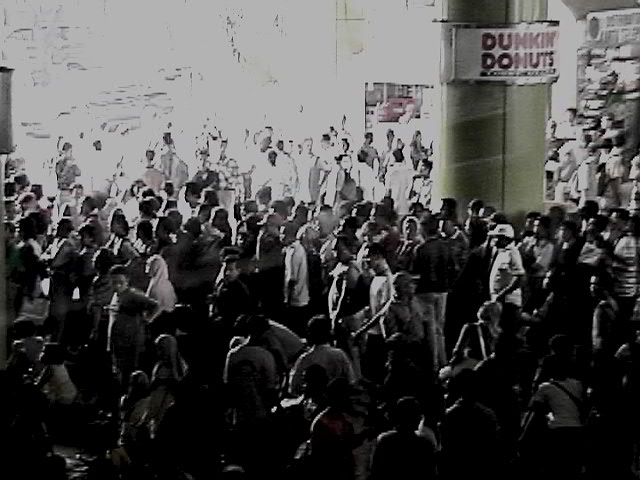
Well over half of the population of Indonesia
lives in what the United States
would term poverty.
Drought and forest fires
Asian economic collapse
political crisis:
the dismal combination that occurred after 1997
created major economic issues for almost all Indonesian families.
The agency charged with creating sustainable population growth
and monitoring the well-being of each family is the
Badan Koordinasi Keluarga Berencana Nasional,
better known as BKKBN.
The magnitude of the challenge BKKBN faces is awesome:
Indonesia is comprised of more than 17,000 islands
more than 400 distinct ethnic groups
and nearly 500 hundred languages.
Every ethnic group has its own customs,
traditions, community, and religious beliefs.
One trait shared across all groups is a great love of children,
both boys and girls, upon whom great intrinsic (as opposed to economic)
value is placed. This trait makes the barrier to creating a desire for
families limited to 2 children even greater than those encountered
in other countries.
Statutes, cultural and religious beliefs all dictate that
only voluntary, pre-conception means of limiting population
growth be employed.
BKKBN has been phenomenally successful in meeting its mission:
Indonesia has won multiple international awards
for its success with voluntary family planning.
The United Nations has named Indonesia
most successful of all member nations in this area
year after year.
Out-of-wedlock birth is quite rare
and teenage out-of-wedlock pregnancy is virtually unknown.
A nation-wide means of assessing
each family's progress toward prosperity has been established.
Volunteers at local and village levels go door-to-door
interviewing their willing neighbors on their standard of living and
regional offices collect the information and forward it to
BKKBN and the Ministry of Population.
|